
From the Apothecary: Ashwagandha
Ashwagandha is by far one of my very favorite herbs. It’s also one of the first herbs that I got to know on a deep personal level. That's why I thought it would be the perfect choice to kick off our series! For centuries, Ashwagandha has been cherished in traditional and Ayurvedic practices and remains one of the most widely recognized herbs in the world today. I personally first started to use it as a means to promote a restful sleep and elicit calm into my day. I’m a big big fan of this beautiful root!

How to Use Ashwagandha
There are various ways to incorporate ashwagandha into your daily routine:
Tinctures*: Ashwagandha can be made into a tincture, which can be added to water or juice, or taken directly by mouth.
Tea*: Ashwagandha root should be made into a decoction. Leaves can be made into an infusion or tea. Both offer a traditional way to incorporate ashwagandha into a daily routine.
Powder^: Ashwagandha powder can be mixed into smoothies, teas, or warm milk, often sweetened with honey. It is one of the most traditional methods of consumption.
Capsules* and Tablets: These are convenient for those who prefer a quick and easy way to take their supplements without the taste of the powder.
Topical Applications^: Ashwagandha oil or creams can be used topically for their anti-inflammatory and soothing properties.
Things to Consider
As with any herb, individual responses to ashwagandha may vary.
If you are pregnant, breastfeeding, have a medical condition, or take prescription medications, consult a qualified healthcare professional before using herbal products.
When selecting herbal preparations, follow the manufacturer's instructions or the guidance of a qualified herbal practitioner.
Always discontinue use and consult a healthcare professional if you experience unwanted effects.
Educational Disclaimer
The information shared by Ancestral Roots Wellness is intended for educational and informational purposes only and should not be considered medical advice. Herbal products, services, and educational materials are not intended to diagnose, treat, cure, or prevent any disease. As with any wellness practice, please consult your physician or qualified healthcare provider before using herbal products, particularly if you are pregnant, breastfeeding, have a medical condition, or take prescription medications.
* Usually available in the Ancestral Roots Shop.
^ Available via special order in the Ancestral Roots Shop.
History of Ashwagandha
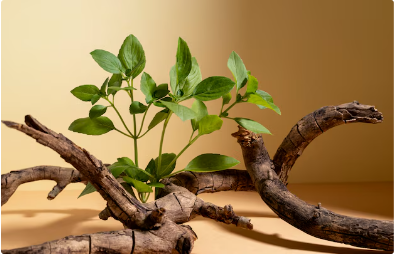
Ashwagandha, scientifically known as Withania somnifera, is a small shrub with yellow flowers that's native to India and North Africa. It can be identified by its dull green leaves that grow radially from the stem and yellow bell-shaped flowers in the midsummer. In Autumn, you can find Ashwagandha with red and orange berries. The name "ashwagandha" is derived from Sanskrit, meaning "smell of the horse," which refers to both its unique smell and its potential to increase strength. It has also been called Winter Cherry or Indian Ginseng. The seeds of this plant have been used in the production of some vegetarian cheeses while its berries can be used a substitute for soap. This herb has been used for over 3,000 years in traditional Ayurvedic medicine, where it is revered for its restorative and rejuvenating properties.
Traditional Uses of Ashwagandha
Ashwagandha has been valued in Ayurvedic traditions for thousands of years and continues to be one of the most widely recognized herbs today.
Many people choose to incorporate ashwagandha into their wellness routines as part of practices focused on balance, resilience, and overall well-being.
Traditionally, it has been used in preparations intended to support daily vitality, encourage a sense of grounding, and complement broader lifestyle practices such as mindfulness, movement, rest, and self-care.
Today, ashwagandha can be found in teas, powders, tinctures, capsules, and other herbal preparations used by people around the world.
Spiritual Uses of Ashwagandha
In addition to its physical benefits, ashwagandha has been used for centuries in spiritual practices:
Meditation Aid: Ashwagandha is believed to enhance mental clarity and focus, making it a valuable aid for meditation and mindfulness practices.
Balancing Chakras: In Ayurvedic tradition, ashwagandha is used to balance the root chakra, which is associated with stability and grounding.
Spiritual Protection: Many traditional cultures use ashwagandha for spiritual protection and to ward off negative energy.
Enhancing Spiritual Energy: Ashwagandha is sometimes used in rituals and practices aimed at increasing spiritual energy and enhancing one's connection to the divine.
